


By Stephanie Jacob
 With the idea of privatisation being widely discussed as a possible route for Malaysia Airlines Bhd (MAS), it is worth looking at the players who might be interested in and capable of carrying out such a corporate exercise. Names such as Syed Mokhtar Albukhary, Syed Azman Syed Ibrahim and Ahmad Johan don’t inspire confidence.
____________________________________________________________________
Before one considers taking MAS private, it is important to remember how badly the last privatisation effort turned out for Malaysia Airlines, and the fact that the fallout has had repercussions lasting all the way till early 2012 (and some might say even until now).
Such an unprofitable misadventure will likely mean that the capability of any new investor will be very heavily scrutinised, so there is no repeat. But who are the players most likely to be in the running to take the national carrier into private hands?
 The airline industry is a tough one, and on average it generates one of the lowest returns among the various industries, highlights an International Air Transport Association (IATA) report titled ‘Profitability and the air transport value chain’ which was published last June.
IATA’s report noted that “over the past 30-40 years the airline industry has generated one of the lowest returns on invested capital among all industries.
“Despite the clear value being created for customers, the airline industry has found it difficult to make an adequate level of profits… after paying tax and debt interest, net profits per passenger were just US$2.56.”
As Kinibiz has noted, Asia-Pacific network carriers such as Malaysia Airlines, reported a return on invested capital (ROIC) of just 3.7% while low cost carriers in the region say a higher 6.9% ROIC between 2004 – 2011.
There have been clear winners and losers in the industry, and another Malaysian born carrier AirAsia falls in the first category. That said, many many others have found themselves in the latter category – anyone planning to take MAS on must be ready for a huge challenge.
So who are the players in the running?
The most obvious name to be thrown into the hat would be Syed Mokhtar Albukhary, who reportedly has in the past expressed his interest in taking the national carrier private.
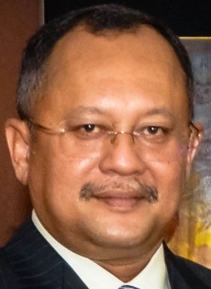
Syed Azman
Also in the mix are Weststar Group Sdn Bhd group managing director Syed Azman Syed Ibrahim and Airod Sdn Bhd’s president Ahmad Johan – both of whom the appear to have the support of the vocal Malaysia Airline System Employees Union (Maseu).
Khazanah taking full control of the airline, and then possibly taking it off the bourse is also another option. Then there is the possibility of a foreign airline taking a controlling stake in the MAS, as was recently suggested in a Centre of Aviation (Capa) report.
KiniBiz takes a look at each individual, as well as the Khazanah and foreign airline options, to get an idea of all the players in the mix.
Syed Mokhtar Albukhary
It is perhaps unsurprising that Syed Mokhtar is on the list of potential suitors, as Malaysia’s seventh richest man has reportedly eyed the national carrier in the past. Although people close to the media shy tycoon dismissed reports that Syed Mokhtar was eyeing MAS, his name is consistently linked to the airline.
 Of course Syed Mokhtar is no stranger to privatising government owned entities, having taken control of both Pos Malaysia, and Proton via his DRB-Hicom vehicle recently.
His rags-to-riches past makes him a hero for many, but his closeness to political figures such as former PM Mahathir, and the current leadership also means that government related deals inevitably raises eyebrows.
But there are perhaps several other pertinent issues that must be considered when evaluating if Syed Mokhtar is the right man for the job. First of which is the size of the MAS problem, and the fact that the aviation industry is notoriously difficult to navigate.
Currently his exposure to the sector is through his ownership of the Sultan Ismail Airport in Johor, which he owns via Senai Airport Terminal Services Sdn Bhd. But will this be enough?
The second question that must be addressed is whether or not Syed Mokhtar is a systemic risk. In a detailed piece on his sprawling business empire last year, KiniBiz also highlighted the fact that at that point, the billionaire was also in debt to the tune of RM28 billion.
Although in many instances the debt is backed up by strong assets, the question surely must be asked if the government would be risking a repeat of the first privatisation mess, should it allow him to take control of MAS.
Syed Azman Syed Ibrahim, group managing director of Weststar Group
Syed Azman is Malaysia’s 31st richest man, worth about US$560 million. His name is another that tends to crop up when talk of privatising MAS starts, despite the fact the man himself denied the rumours when Kinibiz asked him last year.
 Although his first venture was in the car industry, he made a substantial portion of his fortune in the aviation sector through his Weststar Aviation Services (WAS). Although WAS does have a small fleet of jets, its expertise lies in helicopter services and it has a fleet of 45.
The fleet largely services offshore oil and gas facilities, and has a multi-billion ringgit contract with companies such as Carigali Hess.
In 2013, US based private equity firm KKR & Co bought a minority stake in WAS for around RM600 million and it is expected that WAS will be listed, possibly next year.
KKR’s entry into WAS can perhaps be seen as an indication of the company’s value, which Syed Azman can take credit for. That said the company was built by him from the ground up allowing him to chart its future. Taking on MAS as it is would be a very different proposition. Whether or not Syed Azman can translate WAS success into MAS is the question that needs to be considered.
Ahmad Johan, president of Airod Sdn Bhd
Ahmad Johan is the other name that Maseu have mentioned and he is the president of Airod which is a maintenance, repair and overhaul (MRO) company. Airod is wholly owned by the National Aerospace and Defence Industries Sdn Bhd (Nadi), of which Ahmad Johan is also president.
 One issue with Ahmad Johan as a possible candidate for privatisation is the fact that Nadi has a 50.09% stake in Malindo, with Ahmad Johan holding one share. The other share is held by Indonesian businessman Rusdi Kirana, while the remaining 48.99% is held by PT Lion Group.
Nadi’s participation in Malindo brought about questions over its accounts, with opposition MP Tony Pua highlighting that it had not filed its audited accounts since 2007 as required by the Companies Commission of Malaysia.
Aside from that, while Nadi and Airod have been in the MRO sector for a long time, it is questionable as to whether helming an MRO would give you the sufficient know how to run a commercial airline. As such Ahmad Johan might be a more suitable candidate if specific portions of MAS are privatised, rather than in its entirety.
Khazanah Nasional Bhd
In the first part of this series, it was highlighted that whoever was in control of MAS would need to have the both the political will to enforce the hard changes and the management capability to change MAS’ fortunes.
 Several analysts pointed out that Khazanah’s position as a Finance Ministry vehicle gives it the necessary political cover it needs to address the cost issues portion – which would likely include capacity cuts and downsizing the workforce.
Aside from the fact that it is also worth considering that Khazanah has invested a significant amount in the national carrier, which so far has not brought them desired results.
Over the past couple of years especially, MAS’ management has practiced a ‘load active, yield passive’ strategy. This basically involves heavy discounting to boost passenger numbers and subsequently, revenue.
But this strategy can backfire if the airline is unable to generate enough additional income from new customers to make up for income foregone from discounting, as MAS has experienced over the past few quarters.
Putting aside questions as to whether or not this was the right strategy in the first place, it is one that often takes time to be effective. Done right, eventually from ‘load active, yield passive’, it becomes ‘yield active, load passive’.
Should an outside investor come into the picture now, it can be argued that he will reap the benefits without having had to commit through the tough adjustment period, unlike Khazanah, which has been with MAS for a long period now.
A MAS tie-up with a foreign airline
 Earlier this week Capa released a report suggesting that Abu Dhabi-based Etihad Airways might be considering a tie-up with MAS. It said that the bosses of both airlines had met earlier this month, and that Etihad, MAS, and the government were evaluating the possibility of some sort of equity changing hands.
Although Etihad denied the report today, the fact the counter rallied so strongly suggested that this would be a popular course of action.
However industry watchers reacted more cautiously to the news, with one aviation analyst asking “if you were one of these airlines, would you really want to enter this mess?’ The analyst was referring to the fact that anyone buying into MAS will have to deal with various third parties, including the unions and government.
He added that although there were clear synergies to be gained from such a deal by both parties, the new investor would expect a fair amount of control and it was questionable if they would get it.
The government too, might ultimately find it undesirable to allow a foreign company to take a controlling stake in MAS, given its status as the national carrier.
Yesterday: Is privatisation a realistic route for MAS?
Tomorrow: The core issues MAS needs to tackle
You must be logged in to post a comment.