


By P. Gunasegaram

In the second part of our series on the Employees Provident Fund or EPF, KiniBiz examines the merits of the EPF as a retirement fund. However, because salaries and the retirement age are relatively low, those in the lower income may well need to supplement their income and plan for retirement early.
A common comparison that is often made is between the government’s pension scheme and EPF. Most agree that the pension scheme is superior by far because it provides a guaranteed income after retirement of as much as three fifths of the last drawn salary minus allowances as well as health benefits for the life of the person in addition to a lump-sum gratuity.
What’s more, on top of that increases in salary for the position post retirement are also included in the monthly pension. In the event of death of the pensioner, his dependants are entitled to the benefit.
In addition to the monthly pension, government servants also receive a gratuity of 7.5% of the last drawn salary multiplied by the number of months of service.
 For illustration, let’s assume the last drawn salary of a government servant is RM3,000 a month at the time of retirement. The monthly pension works out to three fifths that or RM1,800 a month. In addition, assuming the person has worked for 30 years, the lump-sum gratuity payment is RM81,000 (3,000X12X30X7.5/100)
In effect, the pensioner after retirement could be earning as much as two thirds of his last drawn salary net of allowances, which is a livable wage and will probably take care of him in his old age.
Not so the EPF. But that’s not the fault of the EPF scheme as we shall see. According to EPF CEO Shahril Ridza Ridzuan, for “for those aged 54 in 2012, around 72% of them will retire with less than RM50,000 in their EPF account. After they have retired at the age of 55 the amount is likely to be insufficient to support their expected retirement life (18-20 years).” (see Q &A below).
In an interview with KiniBiz Shahril explained that about 80% of EPF contributors are in the low income group and therefore their mandatory contributions may not be enough for them to sustain a regular income in old age after the maturity of their contributions.
The government pension plan is a defined benefit plan – the government promises benefits according to a set formula. However, the EPF is a defined contribution plan – members contribute specified amount of their salaries into the fund.
 At the age of 55, members are entitled to all their contributions plus accumulated returns over the years. Because of the need to preserve principal, the EPF is necessarily conservative in its investments, the target return being just inflation plus two per cent, although it oftens exceeds this amount.
While Shahril considers employer and employee contributions to be reasonable at the moment, amounting to a total of 23-24% of salary, one way of increasing the final retirement sum is to increase this further.
But there are repercussions – it reduces disposable income for the worker while it increases wage costs for the employer. Also, it will also increase the size of the EPF fund at a more rapid rate, increasing the prevailing problem of where the EPF is going to invest its increasing pool of funds. The fund already has more than RM550 billion in its coffers, making it one of the largest retirement funds in the world.
The other solution would be to increase worker incomes, which can come only with overall growth in the economy and higher prosperity. That would also mean that employers should be more acceptable of higher wages and look for ways to increase labour productivity. Things like minimum wage will help as well.
The solution will be longer term. But in the meantime, the low income group, which accounts for four fifths of EPF contributors, simply has no other choice but to supplement their income through other means and/or to continue working well after retirement.
 It would be the right thing to consider raising the retirement age from the current agreed 60 years in stages to 65 or beyond even if employers say otherwise. In the sixties, life expectancy was 55 years and so was the retirement age. Now life expectancy has stretched 20 years to 75 years and the retirement age is only now being extended to 60.
That’s an unsustainable gap. As the population ages even more, the government should be considering eliminating retirement age altogether and allowing people to work as long as they can. That’s not as far-fetched as some people think – some countries are already doing that.
Below are excerpts from the interview with EPF CEO Shahril Ridza Ridzuan on EPF’s retirement benefits:
KiniBiz: How successful do you think has the EPF been in terms of guaranteeing a retirement fund and income for the majority of workers?
Shahril: As a retirement savings fund, the main objective of the EPF is to provide its members basic financial security for retirement. As part of a multi-pillar system of social security, the EPF helps employees to save for their retirement through mandatory savings. To date, we have 13.69 million members, 6.41 million of whom are actively contributing.
The Fund is always committed to preserving and growing the savings of its members in accordance with best practices in investment and corporate governance. It will always be guided by prudence in its investment decisions.
KiniBiz: Do you need to increase contributions?
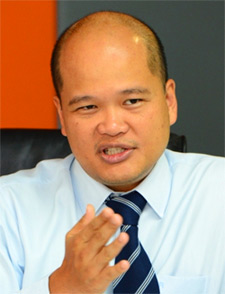
Shahril Ridza Ridzuan
Shahril: Currently, the EPF contribution rates are 24% (for those who receive monthly wage RM5,000 and below) and 23% (for those who receive monthly wages above RM5,000) which in our view is appropriate and suitable given the current wages and salaries structure in Malaysia.
As a background, effective from 1 January 2013, the EPF has increased the employer contribution rate by 1% from 12% to 13% for those who receive monthly wages RM5,000 and below. This decision benefits approximately 5.8 million members or 91.07% of active members in the EPF.
Almost 80% of our active members belong to the low income group and it is apparent that their EPF mandatory savings alone could well be insufficient. As an example, for those aged 54 in 2012, around 72% of them will retire with less than RM50,000 in their EPF account. After they have retired at the age of 55 the amount is likely to be insufficient to support their expected retirement life (18-20 years).
KiniBiz: Do you think incomes are too low now?
Shahril: Insufficient retirement savings are primarily due to a low salary throughout working life. This is compounded by Malaysia having a historically early retirement age by international standards. With the minimum wage and minimum retirement age being introduced by the government, we believe that it would help to enhance members’ EPF savings as well as reduce the amount of time that members are dependent on their retirement savings.
KiniBiz: What kinds of alternatives are available to increase retirement income?
 Shahril: We would like to remind members that while the EPF is responsible for providing basic financial security for its members’ retirement, this may not be sufficient for most members to sustain a comfortable living throughout the span of their retirement. Members are therefore advised to start financial planning for their retirement early and not to depend solely on their EPF savings. EPF members must plan to save through other investment avenues available in the market that suits their risk appetite as part of their retirement planning.
In addition, to avoid any leakage from their EPF savings, members are advised to only make pre-retirement withdrawals when it is really necessary or only use EPF as a last resort. More importantly, the EPF believes that the key to a secure retirement is good financial planning. Members are advised to start planning their retirement savings early and be prudent in managing their savings for their golden years.
KiniBiz: Would you consider allowing substantial withdrawal for property purchase and then payment of instalments from EPF contributions as has been done in Singapore?
Shahril: The EPF already allows members to withdraw a portion of their savings to purchase a house and this has been effective since 1977. Subsequently in 1994, members could withdraw to reduce their outstanding housing mortgage and this was further extended in 2008 to pay housing mortgage installments. For the latter, payments can be made monthly directly to the members or the financier subject to the tenure or amount that the members decided. This can be made till the mortgage is paid in full.
KiniBiz: What kind of a role do you see for private pension fund operators?
 Shahril: Private pension fund operators offer their Private Retirement Scheme (PRS) which is a voluntary retirement savings scheme and complements the mandatory scheme under the EPF. It is an option for members to plan for their retirement on top of the mandatory savings through EPF.
The scheme also provides an option for Malaysians that are not covered by the EPF Scheme to save for their retirement i.e. those who are self-employed, housewives, farmers, taxi drivers, settlers. We are very supportive of the PRS scheme but would like to remind members to do their own research before deciding on selecting a provider or scheme as the risks and structure of the scheme are very different from the EPF.
KiniBiz: What do you think needs to be done to promote better social security in future?
Shahril: All parties should play their role for an effective social security system including individuals, employers and the government through its policies and relevant establishments. At individual level, there is a need to correctly appreciate the concept of retirement and retirement income/savings, as well as to equip ourselves with personal financial knowledge and skills. These would enable individuals to be more effective and efficient in managing their financial resources especially their retirement savings.
At community level, we need an education system that promotes individual financial literacy, instills family values and love for the elderly. Finally, we need a comprehensive social security system and policies that cater to not only financial aspects of retirement, but also old age health care, family support and incentives for carers, as well as continuous review of the system by a well-represented permanent establishment. Necessary actions are needed from now to prepare our society when we become an aged nation in the next 10 to 15 years.
 KiniBiz: Do you think members should be allowed to withdraw all funds at 55 years when the retirement age has been extended to 60?
Shahril: The objective of the EPF Scheme is to prepare members with enough retirement savings to support their retirement life. While the changes in the retirement age take place, the existing “Age 55 Withdrawal” and “Age 50 Withdrawal” remain unchanged at this point of time. Members can opt to withdraw their savings in Account 2 at age 50 and to make full EPF withdrawal at age 55.
However, members are encouraged not to withdraw all their retirement savings in one lump sum at age 55 but to stretch their savings for a longer period via flexible options under “Age 55 Withdrawal” as members can choose to withdraw their savings monthly or partially. Increasingly, our members are opting for this option as a means of providing regular cash flow for themselves in their retirement.
Tomorrow: The quest for higher returns
Yesterday: Should EPF trade in stocks?
You must be logged in to post a comment.