


By KINIBIZ
 It has been quite a year. Of the many corporate deals, the proposed mega merger between CIMB Group, RHB Capital and Malaysia Building Society Bhd (MBSB) stands out as the best for its potential to create synergies and earnings growth for all involved.
But there were others very worthy of consideration — the emergence of Eco World Development Group through the reverse takeover of Focal Aims for instance, Malaysia Airlines’ turnaround plan, and Sime Darby’s massive proposed Papua New Guinea palm oil acquisition amongst others.
But for sheer size, overall impact, excitement and possible benefits, the mega banking merger dwarfs them all. KiniBiz looks at each deal in turn.
_____________________________________________________________________
The making of Malaysia’s largest bank?
 The simultaneous announcements on Bursa Malaysia, that CIMB Group Bhd (CIMB Group), RHB Capital Bhd (RHB Cap) and Malaysia Building Society Bhd (MBSB) would be suspended on July 10, 2014 was the first indicator that something big was brewing in the banking sector — likely to be a mega merger between the three entities.
The three confirmed they had been given the go ahead to enter into a 90-day exclusivity period to conduct negotiations with the aim of merging the three groups and creating a mega Islamic bank.
With this confirmation, the three begin discussing the cost, structure and other details which would be crucial to forming the mega bank – which would ultimately become Malaysia’s largest banking entity, surpassing the Malayan Banking group.
And the creation of a bank bigger than Malayan Banking is almost certainly the brainchild of Nazir Razak, long-time CIMB chief who ascended to the chairman position this year.

Nazir Razak
As negotiations went underway, several key issues had to be handled. The first was centered around the value of Aabar Investments PJS equity stake in RHB Cap. It is believed that Aabar was pushing for RHB Cap shares to be valued at RM12 per share, which is what it paid when acquiring its 21% stake in the group. However, that was a left hand, right hand transaction between two arms of the Abu Dhabi government.
The second was whether the Employees Provident Fund (EPF) which has either the majority or substantial stakes in the three could vote on any deal. The fund is RHB Cap’s and MBSB’s majority shareholder with 40.9% and 64.6% respectively. It also holds a 14.6% stake in CIMB Group. Bursa Malaysia ultimately decided that given EPF has stakes in all entities and that they had prior knowledge of the deal, it was deemed not eligible to vote.
Other questions which emerged included who will take on what role in the enlarged entity, and whether or not the initial cost of setting this up would outweigh its benefits. On Oct 9, the three entities announced that they had reached an agreement on the structure of the merger deal. The deal would be executed via a share-swap deal between CIMB Group and RHB Cap at an exchange ratio one RHB Cap share for 1.38 CIMB Group shares based on a benchmark price of RM7.27 per CIMB Group share and RM10.03 per RHB Cap share.
Under the deal, RHB Capital will effectively acquire CIMB Group’s business by issuing shares in exchange. CIMB group will be valued at RM7.27 per share or RM60.58 billion while RHB Cap will be valued at RM10.03 per share, a premium of 15% to the share price on July 9, the date before the merger announcement. The deal values RHB Cap at RM25.80 billion.
 Also, analysts say Aabar, since RHB Cap is technically the acquiring company, will not need to provide for any diminution in value of the investments.
CIMB Group will undertake a capital reduction exercise to facilitate the distribution of the RHB Cap shares to its shareholders, following which CIMB Group will be delisted. CIMB Group shareholders will own 70% of the merged CIMB-RHB entity, while RHB Cap shareholders will hold the remaining 30%.
In tandem, CIMB Islamic, RHB Islamic and MBSB will merge to form a new Islamic bank. CIMB Islamic will acquire both RHB Islamic and MBSB. It will pay RM4.18 billion for RHB Islamic to be satisfied by CIMB Islamic shares. MBSB shareholders will be offered RM2.82 per MBSB share, to be paid for through the issue of new redeemable convertible shares preference shares in CIMB Islamic.
CIMB-RHB-MBSB are now in the process of ironing out further details, and obtaining the permission of shareholders and other various regulators. Should this all go smoothly, the deal is expected to be completed by mid-2015.
KiniBiz has chosen this deal as the best corporate deal for 2014, although it is not finalised yet, because of the potential it creates for CIMB-RHB-MBSB. Although it is true that there will initially need to be large amounts of rationalisation and substantial cost, ultimately there are likely to be synergies that make the deal worth it.
According to Kenanga Research, such synergies could include building economies of scale, a new growth engine in the form of a mega-Islamic bank with a micro-financing focus and an increased retail presence in Singapore via RHB Cap which is fully licensed there.
Public Investment Bank added that the merger looks to be a win-win situation for all. Even Aabar Investments is unlikely to disrupt proceedings even though its RHB stake is valued lower than when Aabar purchased it.
If the merger is successful, the new entity will also become the largest banking group with total assets of RM614 billion versus Maybank’s RM579 billion. So the deal will also come with bragging rights. And although that will not be what drives CIMB-RHB-MBSB to get the deal done, it surely will be a nice added incentive.
– by Stephanie Jacob
Other contenders:
Eco World joins the big league in a hurry
 The emergence of Eco World Development Group Bhd in the Malaysian property scene had been phenomenal, going from a private entity to playing with the big boys in about a year or so. And a key component in the rise of Eco World had been a massive assets injection deal announced in April this year, which would complete the transformation of what was Focal Aims Holdings Bhd, a little-known Johor-based developer, into Eco World.
While the consolidation of land bank from the unlisted shareholder vehicle into the listed entity was always coming, the actual execution impresses for the sheer impact of it.
On April 25 Eco World announced an exercise to inject some 3,106.8 acres in land bank worth over RM30 billion in gross development value (GDV). This more than tripled the company’s total land bank and GDV to 4,433 acres and RM43.52 billion respectively, firmly putting it among the likes of SP Setia, Sunway, Mah Sing and the other big boys of the property scene.

Chang Khim Wah
The completion of this massive exercise, now expected for early next year, is tipped to be a platform for Eco World to hit RM5 billion in total sales for this financial year and the next, said chief executive officer Chang Khim Wah in April.
In one fell swoop, with this deal Eco World went from a sleepy developer subject to a reverse takeover in September 2013 to a serious player clocking over RM2 billion in property sales in the first eight months of 2014 — the figure was meant to be its full-year target.
This sales figure of RM2 billion nearly matches those of more established developers, for example Sime Darby Property’s RM2.15 billion in sales for the 2013 financial year and Mah Sing’s RM3 billion in sales for the same year. Eco World eventually finished FY14 ended Oct 31 — a 13-month period as it changed its financial year end — at RM3.2 billion in property sales, making it likely that the RM5 billion mark will be surpassed next year.
No mean feat for a new player born essentially overnight on the property scene.
– by Khairie Hisyam
Malaysia Airlines’ turnaround 4.0 takes off
 Over the years of a chequered financial history, the government has spent about RM17 billion in recovery and restructuring programmes to save Malaysia Airlines. In the wake of Khazanah Nasional Bhd’s decision to pump in a further RM6 billion in what is the fourth major rescue since 2001, many have asked: Is it worth it?
To evaluate that, it is necessary to see what is different this time around. And there are several key steps outlined in Khazanah’s ‘Rebuilding a National Icon – The MAS Recovery Plan’ 12-step plan that makes Kinibiz hopeful.
The first is that it is more focused on what kind of airline it wants to be. This will allow MAS to reconfigure its fleet to better fit its network and markets, including moving to smaller aircraft, retiring specific aircraft types, and/or adding seats to aircraft to reduce unit costs – ultimately resulting in a smaller but more effective airline.
 MAS will also downsize its workforce by some 30% or 6,000 jobs, a painful and unpopular but necessary move which will make MAS a leaner organisation. A new CEO will also be appointed, and for the first time, foreign candidates are also being considered for the post. All good as it widens the talent pool from which to source candidates for not just CEO, but all top positions.
Finally, the plan also seems to acknowledge the importance of yield management. From the record losses seen over 2014, it is clear that a ‘load active, yield passive strategy’ does not work for MAS. By indicating a focus on yields, it would appear that those in charge of reviving MAS fortunes are finally recognising its importance.
– by Stephanie Jacob
Sime Darby pounces on New Britain Palm Oil Ltd

In October, Sime Darby announced a surprise RM5.6 billion bid for New Britain Palm Oil Ltd (NBPOL), not two weeks after walking away from talks with Kulim (Malaysia) Bhd to buy the latter’s 49% stake in the company.
And there are no two ways about it: Sime Darby is paying a premium to bag NBPOL. At £7.15 (RM37.53) per NBPOL share, the offer is at an 85% premium to NBPOL’s last closing price on the London Stock Exchange prior to the offer and some 10% higher than the fair value range that was previously established by NBPOL’s board back in 2013.

But the premium is understandable. Going beyond the fair value range makes it hard for the board to say no, while at the same time inducing other shareholders to sell. Without the sweetener the deal may have been dead and buried before it was even considered.
That said, the premium’s justification depends on Sime making the most of NBPOL’s promise and the real risk of NBPOL being overvalued places this deal as a contender for the worst deal of the year as well, which is the next piece in the issue.
Looking at the asset itself, bagging a strong brand such as NBPOL would be a victory for Sime Darby, who is in pole position, in denying its rivals from bridging the gap in the market. Already the world’s biggest palm oil producer, NBPOL would boost its planted area by some 15%, not to mention opening more doors to Europe which would only strengthen Sime Darby’s market position.
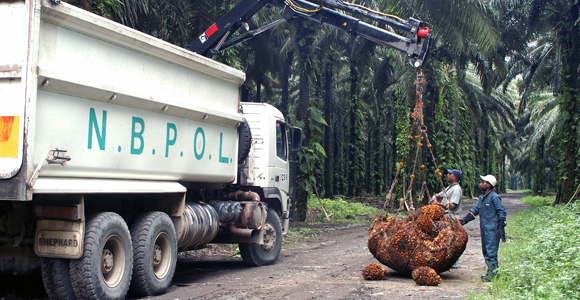 Furthermore, with NBPOL Sime Darby also gains a foothold in Papua New Guinea, acknowledged as an especially fertile area for palm oil cultivation, as a point for further expansion in the state — armed with NBPOL’s established expertise and track record in the state to boot.
Overall, in NBPOL, Sime Darby is sowing a potentially lucrative seed for the future in an industry where the phrase “long-term” is much, much longer than many other sectors. If the potential benefits from the NBPOL acquisition can be realised with proper execution going forward, the palm oil world is Sime Darby’s oyster.
– by Khairie Hisyam
The winner, Telekom, takes it all

Late last year, rumours surfaced that the YTL group, Telekom Malaysia Bhd (TM) and DiGi.com Bhd were eyeing a juicy stake in WiMAX operator Packet One Networks Sdn Bhd (P1). Tongues continued to wag well into early this year.
In March this year Telekom Malaysia announced it had entered into an investment agreement with P1 shareholders Green Packet Bhd and SK Telecom Co. Ltd. to buy a 57% stake in the company.
Under the agreement, TM agreed to buy 57% of P1 for RM350 million and to subscribe to RM210 million of Green Packet’s newly issued redeemable exchangeable bonds. TM also told the Malaysian Wireless website that it would partner with Green Packet to invest up to RM1.65 billion over one to three years in P1, where most of the funds would be used for P1’s operations.
The deal was officially completed in early October. TM ended up with a 55.3% stake in P1, giving it access to P1’s 2.3 gigahertz (Ghz) for WiMAX and 2.6 Ghz for LTE (long term evolution) spectrum bands, which complement TM’s 10 megahertz (MHz) of the 850 MHz band and 8.5 MHz of the 450 MHz band.
 TM’s purchase was heavily criticised by analysts (and a KiniBiz Tiger), who deemed the deal expensive following the announcement of the deal in March. But Tiger could be wrong.
The money invested by TM in P1 is a small price to pay for the former to become a telco powerhouse from the fixed-broadband player it currently is.
Turning around the struggling P1 will not be easy, but with the valuable spectrum it has now has access to, TM can finally be a wireless player to contend with, particularly in the LTE space. Indeed, the winner does take it all.
– by Sharmila Ganapathy
Tropicana flips Canal City land to Eco World
 Flipping properties can be lucrative and this year Tropicana Corp provided an excellent example of this.
But the story goes back to April 2013, when Tropicana bought some 1,172 acres in Kuala Langat — what was known as Canal City — for RM1.3 billion in total from the Selangor state government. This sum comprises a land purchase price of RM587 million, interest costs as well as a share of the gross development value (GDV) and share of profits from the development of the land. It was a sweet deal for Tropicana as payments are deferred over a period of 20 years.
Fast forward 11 months later, Tropicana carved off some 308 acres from the land it bought and flipped it to Eco World Development Group Bhd for RM470 million in mid-March.
It was an excellent profit-taking move. Sans the RM587 million cash payment, Tropicana was allowed to pay for the land gradually over two decades through profit sharing and whatnot, yet here it was cashing in on part of the same land immediately. Not to mention the potential boost from a rising brand in Eco World parked next to whatever Tropicana plans to build on the remaining land area.
Taking an average per-acre price of the entire land it bought in 2013, the cost comes to RM341.6 million for this 308-acre parcel alone, which means Tropicana pocketed a clean RM128.3 million in profits from this transaction alone: a 37.5% gain.
Looking at it another way, the sales price of RM470 million claws back a substantial portion of the RM587 million payment made upfront to acquire the entire land in the first place.

Abdul Khalid Ibrahim
This deal still leaves Tropicana with 864 acres with a net upfront cost of RM117 million plus the profit-sharing payments and so on over the next 20 years. In terms of the overall price, the sale to Eco World reduces Tropicana’s per-acre land cost from RM1.1 million to RM960,000 or so.
No wonder then-Selangor Menteri Besar Abdul Khalid Ibrahim seemed upset.
A week after the deal was announced, Khalid demanded RM844.2 million immediately for the 1,172-acre land sale, saying that “since Tropicana has realised the land’s full potential from the sales, the state too, will do the same” despite nothing in the sales agreement providing for such a demand.
– by Khairie Hisyam
You must be logged in to post a comment.